


It is possible to find an adult who does not know what "lumbar osteochondrosis" is.On average, one in three (sometimes even more) healthy middle-aged people will experience acute low back pain at one time in their lives, with one in five or one in six reporting that the problem occurs regularly and is even a "source" of sick days.
However, patients often cannot explain in detail what exactly is going on in their lower back.Most of them have never been tested, and treatments including "shots," "ointments" and massages can often last anywhere from a few months to a year.
If you "push" such a patient and start asking about his diagnosis, then, after suffering a little, he will declare that he has "osteochondrosis."What does this disease mean for the lumbar spine?
Lumbar Osteochondrosis – Is it a Disease or “Normal Life”?
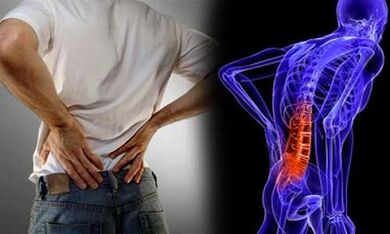
First, we need an authoritative statement: "Osteochondrosis" does not cause harm.It cannot manifest itself in any way because it is a process of dystrophy and degeneration of the intervertebral disc (that is, the cartilage composed of the nucleus pulposus and annulus fibrosus).Intervertebral discs are cartilage designed to act as shock-absorbing "air bladders," softening vertical acceleration and angular acceleration - the brakes between adjacent vertebrae.
It is known that cartilage has no nerve and vascular tissue, so processes that occur "purely in the disc" do not affect adjacent structures at all and do not manifest themselves in any way.A similar example in spinal neurology is Schmohl's hernia, in which the herniated herniation is firmly covered by the cancellous bone tissue of the adjacent vertebrae.The disc is not painful.
In this case, rickets (the suffix "-oz" means growth, enlargement) is not quite correct.Cartilage tissue does not grow or increase throughout a person's life.As liver fibrosis (cirrhosis) occurs, you will notice that the liver's network of structures has begun to develop, impairing function.
With rickets (or osteochondrosis), the discs only begin to change their structure under the influence of years of stress.
They cause stress on adjacent vertebrae because, according to Newton's laws, every movement under static load causes exactly the same reaction or bracing reaction.How does osteochondrosis develop?Why does it happen?
Causes of "lumbar osteochondrosis"
Symptoms of osteochondrosis of the lumbar spine (more precisely, intervertebral discs) can be detected at a young age, especially in various diseases of the musculoskeletal system.
For example, these include:
- Congenital anomalies (different leg lengths);
- Various types of flat feet (vertical, transverse);
- Spinal deformity (scoliosis);
- Spondylolisthesis (the lower lumbar vertebrae slip forward and backward from the sacrum).
All these diseases can lead to increased impact loads on the spine (e.g., flat feet, when the elasticity of the arch of the foot is reduced), or to significant asymmetry of the spine when the supporting function is systematically achieved due to loading of the disc rim.
It is known that healthy and young cartilage has been found experimentally to be able to withstand weights of up to 2000 kilograms and more without causing damage to itself if it is loaded evenly and statically over its entire surface.Of course, such a load does not exist in everyday life, but when exposed to the edge of the disc it can increase to such values.
If the support area is 20 times smaller and the disc is not very healthy (e.g. old age), then an impact of 60-80 kg (e.g. falling sideways on ice with a load on the shoulder) may cause destruction of the disc, which may appear in the form of a herniation or hernia.
The presence of a herniation or hernia indicates that the disc has become deformed or even "prolapsed" from one or more sides.And, as you know, there is no empty space around the disk.Once the disc begins to contact the nerve roots, adjacent ligaments, and muscles, the consequences of osteochondrosis occur: reflex pain and muscle tension syndrome, forcing patients to consult neurologists, chiropractors, and massage therapists.
As long as the discs are of normal shape, wear is even, and there are no extreme loads, lumbar osteochondrosis is no more worrisome to patients than the age-related tooth wear that criminologists are familiar with.How does reflex pain syndrome manifest?
Symptoms and signs of complex lumbar osteochondrosis

As you have noticed, we are trying to "propagate" the bridge: common osteochondrosis is a completely inevitable process of normal aging of the elastic intervertebral "cushion" in the species "Homo sapiens", as it moves vertically throughout life.And "osteochondrosis" in the memory of acute pain patients is a complex condition.
Maybe let’s start with the signs of root stress.Of course, the symptoms of lumbar osteochondrosis are related to the pain caused by segmental nerve roots being compressed by the intervertebral disc.In addition to pain, sensory, motor, and phytotrophic disturbances may occur.
Osteochondrosis low back pain has the following characteristics:
1) Radical pain.It's secondary, like neuralgia, where the swollen nerve roots react very "violently" to an electric shock.
The pain is sharp, sudden, stabbing, piercing the lower back and may radiate to the legs.The pain appears and immediately intensifies, hence the name "low back pain" or "low back pain."It is this kind of "low back pain" that makes people "rush to stand up" because any movement will cause the pain to worsen.
In addition, slight coughing, sneezing, straining, laughing - anything that shakes the swollen root will make the pain worse.
If the root is part of the sciatic nerve, the pain will "shoot" through the buttocks into the popliteal fossa and below, which is called "lumbar sciatica."
2) Muscle pain.There are large muscle masses near the nerve roots.Usually, in spring and autumn they "cold", swell themselves and become dense.Their venous outflow is impeded and they themselves are a source of pain.
The pain is constant but not severe.On the contrary, it is aggravated not only by sudden movements, but also by prolonged maintenance of monotonous postures (which worsens the blood supply).
- Sometimes this myofascial syndrome occurs after a herniation or hernia has worsened, when the hernia's sharp "hooks" "massage" the muscles and ligaments for an extended period of time.
3) Movement disorders.Because the intervertebral disc can compress not only the sensory nerve roots, but also the motor roots, peripheral paralysis or even paralysis may occur.With varying degrees of injury, leg weakness (for example, weakness on one side when climbing stairs) and foot weakness may occur, resulting in gait disorders.
Muscle atrophy occurs and one leg "loses weight".This purely motor, painless disease is rare and can cause disability if left unnoticed.
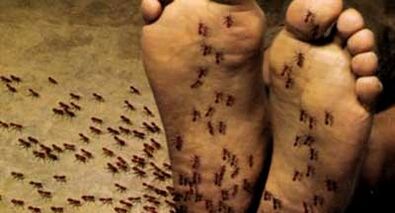
4) Sensory impairment.They appear with pain and often persist after the pain has ended rather than in pain.They manifest as numbness, decreased sensitivity of the skin on the legs, "streaks," vertical streaks, and a "crawling goosebumps" feeling on the toes and feet.
- Sometimes, when plant fibers are damaged, symptoms such as hyperhidrosis, cold skin, and impaired hair and nail growth can occur.
These are the most common symptoms of complex lumbar osteochondrosis present in the lumbar region.There are individual syndromes - for example, damage to the cutaneous nerve of the thigh, or damage to the cauda equina, superior bone, pure radiculitis or piriformis syndrome - but even a brief description of them would take too much time.
For patients, the above basic signs are enough to make an appointment with a neurologist.How can we “solve worries with our own hands”?How to treat lumbar osteochondrosis at home?
What should you do when lumbar osteochondrosis worsens?
The basis of any treatment is symptomatic treatment (eliminating the cause) and etiological treatment (affecting the disease mechanism).It is accompanied by symptomatic treatment.
For vertebral pain (caused by spinal problems), here's what happens:
- Eliminating the cause is by removing a protrusion on the nerve root, a hernia, or pressure from a spastic muscle;
- The effect on the mechanism is to eliminate muscle spasms, restore muscle venous outflow, eliminate nerve root swelling, and fight inflammation;
- Returning to point 2 will eliminate symptoms (pain, numbness, limited mobility), as eliminating swelling, inflammation, etc. can restore mobility and relieve pain.
Get rid of herniations and hernias
Typically, it is not the starting point for treating acute back pain.Almost always, the pain syndrome will be relieved initially, and then after massage and chiropractor treatment, all symptoms will disappear without the need for surgery.
As foot weakness progressed and severe, intractable pain persisted for two months, the question of surgical intervention arose.Additionally, surgery is required when the central canal containing the spinal cord or cauda equina is highly compressed.
Treatment of lumbar osteochondrosis, drugs
Treatment of lumbar osteochondrosis and its complications includes the following measures.During the acute phase (day 1 – day 2):
- To reduce muscle and spinal swelling, a salt-free diet and limited fluid intake are recommended.You can even take a mild potassium-sparing diuretic.
- A semi-rigid orthopedic bra is recommended to protect muscles from excessive movement.
- From the first day, it is recommended to apply a warm ointment containing NSAIDs and use a patch, such as the "Pepper" patch.
- In the acute phase, you cannot warm your back.As inflammation increases, so does swelling.Therefore, the use of any heating pads is prohibited.You can warm yourself by removing heat from yourself (wool bands, warming ointments), which does not add heat from the outside, but on the contrary, transfers heat from the depths to the outside.
- In the acute phase of lumbar osteochondrosis, short-term treatment can be provided by intramuscular "injections" of NSAIDs and muscle relaxants.This will help relieve nerve tissue swelling, eliminate inflammation, and normalize muscle tone.
In the subacute phase, after overcoming the maximum pain, "injections" should no longer be used, attention should be paid to restorative drugs, such as modern preparations of "B" vitamins.They can effectively restore damaged sensitivity and reduce numbness and paresthesia.
Physiotherapy measures continue and exercise therapy for lumbar osteochondrosis has arrived.Its job is to return blood circulation and muscle tone to normal when swelling and inflammation have subsided but muscle spasms have not yet completely resolved.
Exercises for lumbar osteochondrosis of the spine must be performed on "warm-up muscles" after a light general warm-up.
The primary therapeutic factor is movement, not the degree of muscle contraction.Therefore, to avoid recurrence, the use of heavy objects is not allowed; gymnastic mats and gymnastic sticks are used.With their help, you can effectively regain your range of motion.
Continue to apply the ointment and use the Kuznetsov applicator.Swimming, underwater massage, and Charcot showers are all on display.In the advanced stages of fading, home magnet therapy and physical therapy medications are required.
Treatment usually takes no more than a week, but in some cases, osteochondrosis can exhibit dangerous symptoms that may require emergency surgery.
Complications of lumbar osteochondrosis
First, we are talking about a situation where the disc herniation has become a separate fragment and has penetrated the central canal and created a free isolation.There, it compresses the cauda equina nerve, and there may be sudden (in the gym, after an episode of severe pain) severe weakness, or paralysis of the legs and numbness of the perineum.
After a few minutes, severe pain in the legs develops, then reflex urinary retention or incontinence may occur, and impotence may occur.This occurs as cauda equina syndrome, a complication of a herniated disc.In this case, urgent intervention is required to remove the sequestrum and restore function of the cauda equina through decompression.
However, other complications often occur.As we age, multiple hernias and herniations develop, vertebral osteoporosis develops, mobility significantly decreases, and the risk of acute back pain increases.These patients must "call in sick" several times a year and are often treated in nursing homes.
Treatment prognosis
Lumbar osteochondrosis, the symptoms and treatments we discussed above, is for the most part not a disease at all as we know it, but simply a symptom of the inevitable aging and premature "shrinkage" of the intervertebral discs.
Can humans completely get rid of the troubles of lumbar osteochondrosis?The answer can be yes, but then we have to master a different form of locomotion: walking on all fours throughout our lives, or swimming into the depths of the ocean like a fish, constantly moving through the water from an early age.Then, the static axial load on the disc disappears and the signs of "chondrosis" disappear.But another problem will arise: in water, such a powerful structure will become unnecessary and will begin to change until it disappears or is significantly reduced.
As for the individual prognosis for osteochondrosis, it all depends on when the person "decides to wake up."If there is no significant damage to the discs, herniations, hernias and deformities at this time, then, with a healthy lifestyle and physical activity hygiene, you may not develop lower back problems until very old.
In the same case, when there are already "hot spots" in the lumbar region, for example in the form of hernias, which periodically compress the nerve roots, special care needs to be taken to avoid awkward turns, physical exertion, improper lifting and seasonal cold temperatures, which often lead to the exacerbation of osteochondrosis of the spine.